


You probably know this situation:
A sale comes in through your online store, Amazon, DoorDash, or—worst case—via text or WhatsApp. You’re happy. But a second later, you sigh.
Now you have to open your email, copy the customer’s details, open your billing system, paste the data, generate the invoice, download the PDF, reopen your email, and send it. Then you open your inventory spreadsheet and manually adjust stock.
If you do this five times a day, it’s annoying. If you do it fifty times, you’re losing money.
Your business has a problem: your tools are “islands.” Your website doesn’t talk to your billing system, and your billing system doesn’t talk to inventory. Everything is isolated.
The solution? That strange acronym you keep hearing about: API.
The boring definition (just to get it out of the way)
Technically, API stands for Application Programming Interface.
If you stop there, you’ll fall asleep. Let’s skip the dictionary definition and get to what actually matters.
The plain-English explanation: the waiter analogy
Imagine you’re at a restaurant.
- You are an application (for example, your online store).
- The kitchen is where the data and resources live (for example, your inventory system).
You can’t just walk into the kitchen and start opening fridges to see what’s left. That would be chaos. You’d interrupt the staff and probably break something. You need an intermediary.
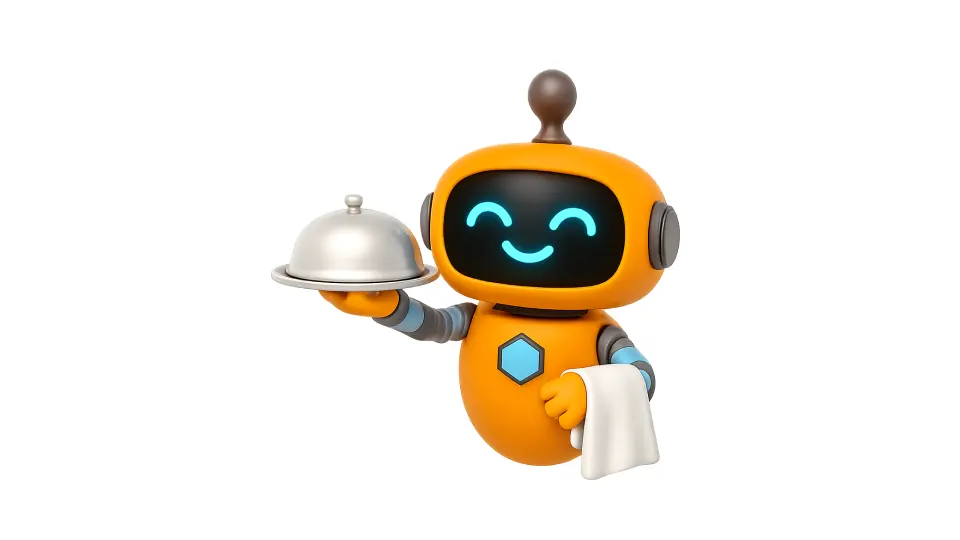
That intermediary is the waiter (the API).
- You ask the waiter: “Do you have steak left?” (the API receives the request).
- The waiter checks the kitchen and comes back with an answer: “Yes, three portions left.”
- You say: “Great, bring me one.”
- The waiter goes back to the kitchen, places the order, and delivers the plate.
An API is exactly that: a digital waiter that allows two systems with nothing in common (like WhatsApp and Google Sheets) to exchange information and requests securely and in an organized way—without you ever leaving the table.
How this changes your business: a real-world example
Without APIs, you are the waiter. You carry notes back and forth. That’s slow—and worse, it exposes you to human error. (Ever mistyped an address or tax ID?)
With APIs, this is what happens:
The “John’s Hardware Store” example
John used to spend his afternoons copying WhatsApp orders into Excel.
He connected the WhatsApp Business API with the Google Sheets API.
Now, when a customer confirms an order in chat, the system “understands”, automatically logs the order, updates inventory, and emails the warehouse to prepare the package.
John didn’t touch a single key. The API acted as the waiter.
Conclusion: stop being the human bridge
If your business has repetitive tasks where you’re just moving information from Screen A to Screen B, you don’t have a workload problem—you have an integration problem.
You don’t need to work more hours. You need better waiters.
We specialize in connecting those islands. We use modern tools to build bridges so your systems talk to each other—while you focus on growing your business.
Have two systems that don’t talk to each other? Message us and we’ll fix it.
